
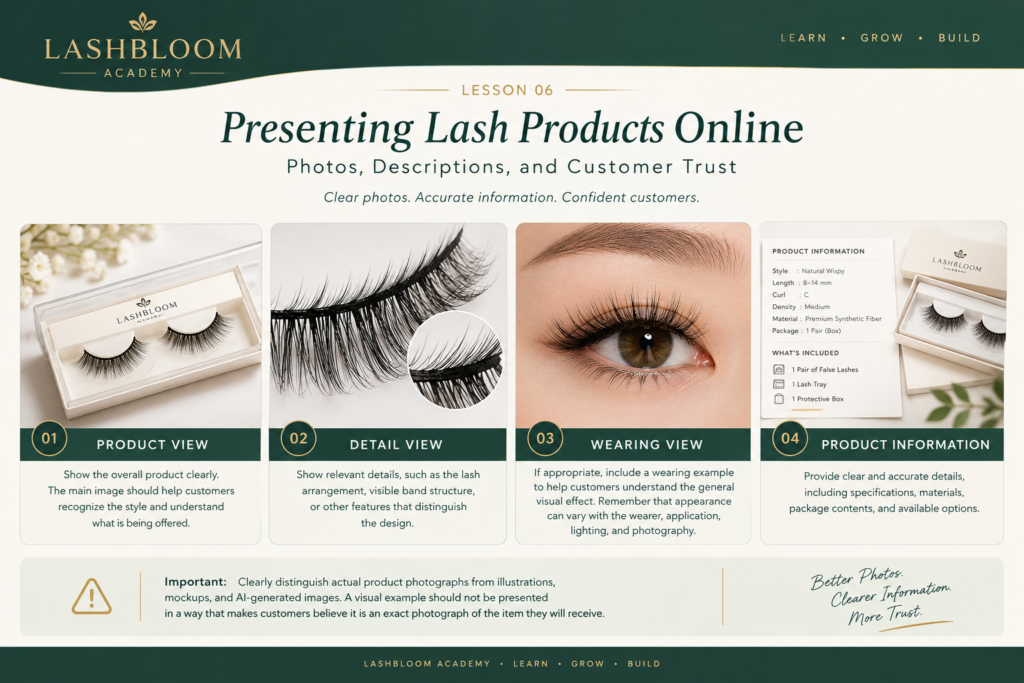
Using clear photos and accurate information to help customers understand a lash product online.
LEARNING PATH: Recognize → Choose → Understand → Develop → Prepare → Present
When customers shop online, they cannot hold a product in their hands or examine it directly. They rely on photographs, descriptions, specifications, and other information to understand what is being offered.
A good product presentation does not need to be complicated. It needs to be clear, accurate, and consistent. In this lesson, you will learn how to plan product photos, write useful descriptions, organize product information, and build customer trust through transparency.
1. Start with the Customer’s Questions
Before preparing photos or writing a product description, consider what a customer may want to know.
- What style or visual effect does this product have?
- What are its confirmed length, curl, density, or arrangement details?
- What materials and construction details are confirmed?
- What is included in the package?
- Are there different styles, sizes, or variations?
- What will the product look like from different angles?
These questions can guide the content of a product page. They can also help identify missing information before a product is presented to customers.
2. Plan Product Photos with a Purpose
Each product photo should help customers understand something specific. A small, well-planned photo set can be more useful than many images that repeat the same view.
Product View
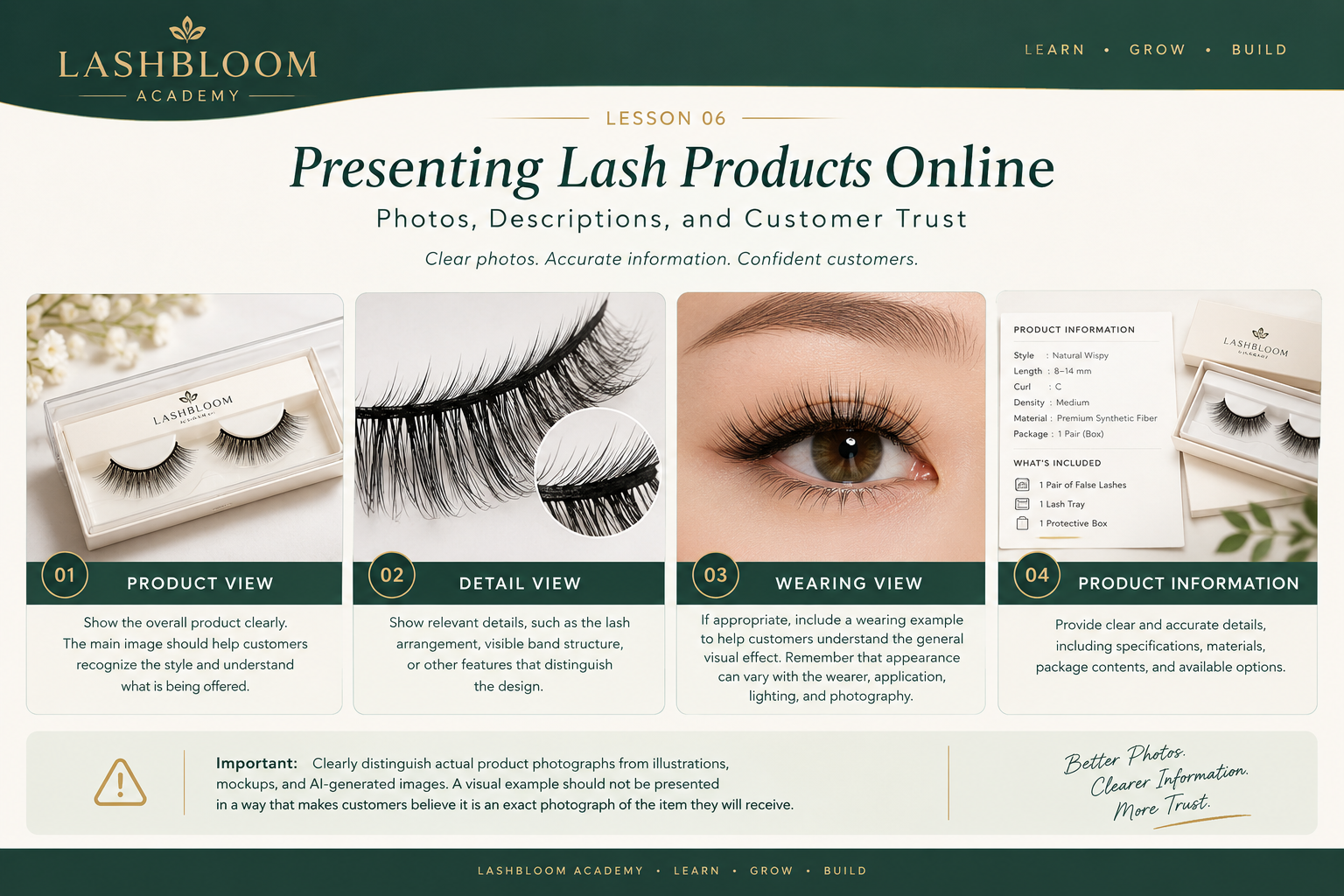
Show the overall product clearly. The main image should help customers recognize the style and understand what is being offered.
Detail View
Show relevant details, such as the lash arrangement, visible band structure, or other features that distinguish the design. Choose details that are meaningful for the specific product.
Wearing View
If appropriate, include a wearing example to help customers understand the general visual effect. Remember that appearance can vary with the wearer, application, lighting, and photography.
Package View
Show the actual packaging and its contents when this information is important to the purchase. Make sure the image matches the product option being sold.
Important: Clearly distinguish actual product photographs from illustrations, mockups, and AI-generated images. A visual example should not be presented in a way that makes customers believe it is an exact photograph of the item they will receive.
3. Write Clear and Accurate Product Descriptions
A useful product description explains the product without making customers guess. It should focus on confirmed information and use language that is easy to understand.
A basic description can include:
- Product name: A clear name or design reference.
- Style: The main visual characteristics of the lash design.
- Specifications: Relevant details that have been confirmed for the product.
- Materials: Material information verified by the manufacturer.
- Package contents: What the customer will receive.
- Variations: Available options and how they differ.
Avoid vague or exaggerated claims. For example, statements such as “perfect for everyone,” “guaranteed comfort,” or “zero irritation” may promise more than can be established for every customer.
Instead, describe observable product features and provide useful information that allows customers to make their own decisions.
4. Keep Images and Information Consistent
Consistency is essential when a product appears in several places, such as a website, catalogue, marketplace, or wholesale presentation.
Check that:
- The product name refers to the same design across all materials.
- Photographs show the correct product or clearly identify illustrative examples.
- Specifications match the selected product variation.
- Package photographs match the actual package contents.
- Product descriptions do not conflict with photographs or other information.
If a product specification or package changes, review the related images and descriptions. This helps prevent outdated information from confusing customers.
5. Build Trust Through Transparency
Customer trust is supported by clear information, realistic presentation, and honest communication. Attractive design can help a product stand out, but it should not replace accuracy.
Good presentation practices include:
- Showing the product from useful angles.
- Explaining what is included and what is not included.
- Separating confirmed specifications from details that are still being checked.
- Using realistic images and avoiding misleading visual changes.
- Responding to questions with specific, verifiable information.
When something is uncertain, verify it before making a claim. Being clear about what is known—and what still needs confirmation—is more useful than making an unsupported promise.
6. Adapt the Presentation to the Customer
Different customers may need different levels of information. A retail customer may want to understand the style, package contents, and available options. A professional buyer or wholesale customer may also need product specifications, variation details, and manufacturing information.
The core facts should remain consistent, but the order and depth of presentation can change according to the audience.
For example:
- Retail presentation: Focus on clear product images, style, confirmed specifications, and package contents.
- Professional presentation: Add useful construction and design details where confirmed.
- Wholesale presentation: Organize product references, available variations, and relevant production information for discussion.
Do not assume that every customer needs every detail at once. Present the most useful information first, and make additional details easy to find.
7. Try It Yourself: Product Presentation Planner
Choose one lash product and plan how you would present it online. Use the table to organize the information before preparing a product page or catalogue entry.
| Planning item | Your notes |
|---|---|
| Product name or reference | ________________ |
| Main style and visual characteristics | ________________ |
| Confirmed specifications | ________________ |
| Main photo: what should it show? | ________________ |
| Detail photo: which details matter? | ________________ |
| Wearing example: is one useful? | ________________ |
| Package photo: what should be visible? | ________________ |
| What questions might customers ask? | ________________ |
| What information still needs verification? | ________________ |
Key Takeaways
- Start with the questions customers are likely to ask.
- Give each product photo a clear purpose.
- Write descriptions using accurate, confirmed information.
- Keep product images, specifications, and package details consistent.
- Distinguish actual product photos from illustrations and AI-generated examples.
- Build trust through transparency rather than exaggerated promises.
- Adapt the depth of information to the needs of retail, professional, or wholesale customers.
Continue Learning
You have followed the learning path from understanding lash styles to preparing and presenting a product online.
← Previous Lesson: From Sample to Product: Preparing a Lash Design for the Market
Educational content only. Product information and presentation needs vary by product, customer, sales channel, and destination market.